16.12.2020
Islam assumes tolerance in response to ignorance»
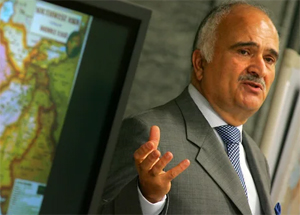
Prince Hassan bin Talal of Jordan on the problems in relations between the West and the Islamic world.
Last week, the Council of Ministers of France approved the bill "On strengthening Republican principles", which caused a heated discussion not only within the country, but also within the world Islamic Ummah (community). If adopted, the law should strengthen state control over the activities of religious organizations to ensure their compliance with republican principles.
At the same time, many Muslims Consider these actions offensive. Jordanian Prince Hassan bin Talal told Kommersant's reporter Marianna Belenkaya in a written interview about whether there is hope for understanding between the West and the Islamic world, and whether there are recipes for countering extremism and radicalism.
- What, in your opinion, is the reason for the sharp escaliation of relations between the islamic world and the west? Is this a spontaneous process or is it deliberately provoked by someone?
There is no sharp escalation between the Islamic world and the West, since there is no common policy and agenda both within the Islamic world and the West. there are regions of tension, there are regions of intersection and convergence, there are allies and there are enemies. There are issues and problems on which they are arguing, especially those which Muslims consider to be their core issues.
Among these issues is the problem of Palestine and the Palestinian people, who have been victims of violence, exile and human rights violations. Nevertheless, some Western countries have unreasonably sided with Israel.
Among these issues is the imbalance in the application of the concept of freedom of speech in some Western countries, where offensive caricatures of the Prophet Muhammad are considered only a way of expressing opinion, but this is a sensitive area for Muslims that affects their shrines. Shrines may not be used for propaganda purposes, be the subject of intimidation or ridicule. Some people in the west insist that this is freedom of speech. But at the same time, they forbid touching such a theme as the Holocaust for discussion.
Islam has flexibility and dynamism, a willingness to accept modern trends in the West that contribute to progress. The mainstream in both the West and the Islamic world, represented by intelligent people, demonstrates the ability for dialogue between the sides. It is impossible to transfer the actions of terrorists who came out of the Islamic world to all Muslims, just as it is impossible to shift the blame for extreme right-wing extremists to the entire West.
— What is the dispute between the West and the East, and can they understand each other?
There is no disagreement, there is a difference. We are not aliens, we are people from the same planet, and we are all human beings. But different conditions of existence contributed to the manifestation of different human abilities. East and West are divided by different interests and hardened ideologies, but they do not contradict each other, it is a multiple manifestation of one human reality.
Instead of getting carried away with the formulation of ideologies and falling into the game of differentiation, we must develop tools and methodologies that recognize the interests of man, his dignity and the perfection of his existence.
— What is the essence of "Islamic radicalism"?
So-called Islamic radicalism is a political position that justifies itself through religion. That is a protest position that got out of control and turned to religion not from its correct, scientific, intellectual and ethical approaches, but rather used texts to justify reprehensible actions. Radicals are selective — they accept texts that suit them and ignore those that don't suit them. They misinterpret religious texts and see signs that are not there. They manipulate the religion. Their practice is one of the worst examples of "misuse of text" in the history of Islam.
— Why do members of the second generation of immigrants become extremists in the West? some experts believe that the reason is their isolation from the background and cultural context of Islam. Do you agree with this?
Yes, there are those who we can call extremists. but you can not transfer this to all members of this generation. On the contrary, they are integrated into Western society, effective and productive as citizens of their countries.
— What is the cause of extremism and militancy within the Islamic countries themselves? Why the terrorist group «Islamic State» (IS, prohibited in the Russian Federation) became attractive to young people? Do you believe that the success of IS and other similar projects is the destruction of national identity, the frustration of Arabs (Muslims) in their rulers, and the powerlessness of the state?
Note that the attractiveness of IS and others is not high, but, on the contrary, limited. Those who are attracted to these groups make up a very low percent. Therefore, this generalization is incorrect. As for the question of why such movements and organizations appear in Islamic countries and not in other countries, there are several reasons. Part of it is related to the lack of respect for freedoms in some of these countries and their inability to provide safe living conditions. Turning to religion is one way to feel safe. The search for refuge in religion turned into a rhetoric of protest, and then turned into extremist, and sometimes violent currents.
I believe that the solution to our social and economic problems begins with the concept of social responsibility, the spread of the spirit of social solidarity, the activation of the role of zakyat and charitable foundations in building the economy and solving the problems of poverty, unemployment and violence.
Religious institutions must work to develop their discourse, as they have a greater responsibility towards their societies. Modern religious discourse must be able to understand society and its current problems, such as poverty, unemployment, corruption, sectarianism and others. Religious discourse should not be limited to religious issues.
— Today, many representatives of the Western world — in Europe, the United States, and in Russia – can’t understand why they are killed for publishing caricatures, go to a demonstration, burn flags?
Nothing in Islam justifies murder, whatever its cause. Rather, Islam tends even in cases of murder to forgive and calls for it, and that "forgiveness is good", while the reaction we see against offensive caricatures is not due to religion, but rather to social and psychological factors. The problem is not in religion, but in every person who believes in his holy places and instinctively devotes himself to their protection, because its mean a lot to him, he sees in it the basis, and meaning of his existence. The problem is not in religion, but in the collective and individual instincts that feel threatened by the fact of their existence and react to this threat emotionally and, perhaps, somewhat exaggerated.
This is a common mistake. Both those who allowed the publication of such caricatures under the pretext of freedom of expression, knowing that it would hurt the feelings of a large part of the population, and those who engaged in incitement on the Islamic field instead of saying that Islam in such cases implies forgiveness and tolerance. As the Qur'an says: "Be condescending, do good, and turn away from the ignorant" (Sura Al-Araf, 199) and " when the ignorant address them, they say, "Peace!" (Surah Al-Furqan, 63). These texts call for responding to abuse not with violence, but with forgiveness.
But at the same time, of course, we categorically do not accept any violent behavior or bloodshed.
— After every major terrorist attack, the Islamic world hears words that Islam, like all world religions, is against violence. But terrorist attacks are repeated again and again, which invariably creates in the minds of ordinary people outside the Islamic world a link between «Islam and terrorism». What can and should Muslims do to reduce extremism within the Ummah? And what has been done?
As I have already noted, this issue is being politicized, Islam is becoming a platform for bargaining, and many are taking the initiative and inciting to immoral concerns. But I recognize that religious institutions, scholars, and elites need to do more to show the other, positive side of Islam's values, to work to speak out against aggressive behavior and ambiguous concepts. But the problem is not only a lack of religious awareness, but also the availability of decent living conditions.
Rather, it is necessary to deal with its underlying reasons, which are caused by oppression, poverty, malnutrition, pollution, inequality in the distribution of wealth and the prevailing relations of exploitation between countries. We are talking about the need for large-scale work to create conditions for a decent human life.
- Jordan has repeatedly faced terrorism. What is your country's experience in fighting terrorism and extremism?
Jordan fights terrorism and extremism through a holistic approach based on legislative, intellectual, moral and security dimensions. We are talking about the principles of restraint and rejection of extremism, the using of religion and ideology to promote violence, hatred and terrorism. And we are working in this direction together with the international community. Terrorism is no longer a problem of one country or region. This threat affects the entire international community. Most of the victims of terror are muslims themselves. Terrorists do not care about a specific purpose, they generally seek to fragment society and find their incubation environment where there is devastation, war, occupation, and refugees.
Every effort should be made to counter the threat of extremism. These include initiatives aimed at strengthening dialogue among the representatives of different religions, currents and civilizations. It is also important to clarify the true face of the noble Islamic religion and its great noble message. Peace and security must be guaranteed, development programmes must be supported and the sources that fuelled terrorism and violence must be eliminated. I believe that the resolution of conflicts and crises in our region, foremost among which is the Palestinian issue, would dry the environment that breeds extremism and terrorism. It would make it possible to counter the propaganda adopted by terrorist groups.
Last week, the Council of Ministers of France approved the bill "On strengthening Republican principles", which caused a heated discussion not only within the country, but also within the world Islamic Ummah (community). If adopted, the law should strengthen state control over the activities of religious organizations to ensure their compliance with republican principles.
At the same time, many Muslims Consider these actions offensive. Jordanian Prince Hassan bin Talal told Kommersant's reporter Marianna Belenkaya in a written interview about whether there is hope for understanding between the West and the Islamic world, and whether there are recipes for countering extremism and radicalism.
- What, in your opinion, is the reason for the sharp escaliation of relations between the islamic world and the west? Is this a spontaneous process or is it deliberately provoked by someone?
There is no sharp escalation between the Islamic world and the West, since there is no common policy and agenda both within the Islamic world and the West. there are regions of tension, there are regions of intersection and convergence, there are allies and there are enemies. There are issues and problems on which they are arguing, especially those which Muslims consider to be their core issues.
Among these issues is the problem of Palestine and the Palestinian people, who have been victims of violence, exile and human rights violations. Nevertheless, some Western countries have unreasonably sided with Israel.
Among these issues is the imbalance in the application of the concept of freedom of speech in some Western countries, where offensive caricatures of the Prophet Muhammad are considered only a way of expressing opinion, but this is a sensitive area for Muslims that affects their shrines. Shrines may not be used for propaganda purposes, be the subject of intimidation or ridicule. Some people in the west insist that this is freedom of speech. But at the same time, they forbid touching such a theme as the Holocaust for discussion.
Islam has flexibility and dynamism, a willingness to accept modern trends in the West that contribute to progress. The mainstream in both the West and the Islamic world, represented by intelligent people, demonstrates the ability for dialogue between the sides. It is impossible to transfer the actions of terrorists who came out of the Islamic world to all Muslims, just as it is impossible to shift the blame for extreme right-wing extremists to the entire West.
— What is the dispute between the West and the East, and can they understand each other?
There is no disagreement, there is a difference. We are not aliens, we are people from the same planet, and we are all human beings. But different conditions of existence contributed to the manifestation of different human abilities. East and West are divided by different interests and hardened ideologies, but they do not contradict each other, it is a multiple manifestation of one human reality.
Instead of getting carried away with the formulation of ideologies and falling into the game of differentiation, we must develop tools and methodologies that recognize the interests of man, his dignity and the perfection of his existence.
— What is the essence of "Islamic radicalism"?
So-called Islamic radicalism is a political position that justifies itself through religion. That is a protest position that got out of control and turned to religion not from its correct, scientific, intellectual and ethical approaches, but rather used texts to justify reprehensible actions. Radicals are selective — they accept texts that suit them and ignore those that don't suit them. They misinterpret religious texts and see signs that are not there. They manipulate the religion. Their practice is one of the worst examples of "misuse of text" in the history of Islam.
— Why do members of the second generation of immigrants become extremists in the West? some experts believe that the reason is their isolation from the background and cultural context of Islam. Do you agree with this?
Yes, there are those who we can call extremists. but you can not transfer this to all members of this generation. On the contrary, they are integrated into Western society, effective and productive as citizens of their countries.
— What is the cause of extremism and militancy within the Islamic countries themselves? Why the terrorist group «Islamic State» (IS, prohibited in the Russian Federation) became attractive to young people? Do you believe that the success of IS and other similar projects is the destruction of national identity, the frustration of Arabs (Muslims) in their rulers, and the powerlessness of the state?
Note that the attractiveness of IS and others is not high, but, on the contrary, limited. Those who are attracted to these groups make up a very low percent. Therefore, this generalization is incorrect. As for the question of why such movements and organizations appear in Islamic countries and not in other countries, there are several reasons. Part of it is related to the lack of respect for freedoms in some of these countries and their inability to provide safe living conditions. Turning to religion is one way to feel safe. The search for refuge in religion turned into a rhetoric of protest, and then turned into extremist, and sometimes violent currents.
I believe that the solution to our social and economic problems begins with the concept of social responsibility, the spread of the spirit of social solidarity, the activation of the role of zakyat and charitable foundations in building the economy and solving the problems of poverty, unemployment and violence.
Religious institutions must work to develop their discourse, as they have a greater responsibility towards their societies. Modern religious discourse must be able to understand society and its current problems, such as poverty, unemployment, corruption, sectarianism and others. Religious discourse should not be limited to religious issues.
— Today, many representatives of the Western world — in Europe, the United States, and in Russia – can’t understand why they are killed for publishing caricatures, go to a demonstration, burn flags?
Nothing in Islam justifies murder, whatever its cause. Rather, Islam tends even in cases of murder to forgive and calls for it, and that "forgiveness is good", while the reaction we see against offensive caricatures is not due to religion, but rather to social and psychological factors. The problem is not in religion, but in every person who believes in his holy places and instinctively devotes himself to their protection, because its mean a lot to him, he sees in it the basis, and meaning of his existence. The problem is not in religion, but in the collective and individual instincts that feel threatened by the fact of their existence and react to this threat emotionally and, perhaps, somewhat exaggerated.
This is a common mistake. Both those who allowed the publication of such caricatures under the pretext of freedom of expression, knowing that it would hurt the feelings of a large part of the population, and those who engaged in incitement on the Islamic field instead of saying that Islam in such cases implies forgiveness and tolerance. As the Qur'an says: "Be condescending, do good, and turn away from the ignorant" (Sura Al-Araf, 199) and " when the ignorant address them, they say, "Peace!" (Surah Al-Furqan, 63). These texts call for responding to abuse not with violence, but with forgiveness.
But at the same time, of course, we categorically do not accept any violent behavior or bloodshed.
— After every major terrorist attack, the Islamic world hears words that Islam, like all world religions, is against violence. But terrorist attacks are repeated again and again, which invariably creates in the minds of ordinary people outside the Islamic world a link between «Islam and terrorism». What can and should Muslims do to reduce extremism within the Ummah? And what has been done?
As I have already noted, this issue is being politicized, Islam is becoming a platform for bargaining, and many are taking the initiative and inciting to immoral concerns. But I recognize that religious institutions, scholars, and elites need to do more to show the other, positive side of Islam's values, to work to speak out against aggressive behavior and ambiguous concepts. But the problem is not only a lack of religious awareness, but also the availability of decent living conditions.
Rather, it is necessary to deal with its underlying reasons, which are caused by oppression, poverty, malnutrition, pollution, inequality in the distribution of wealth and the prevailing relations of exploitation between countries. We are talking about the need for large-scale work to create conditions for a decent human life.
- Jordan has repeatedly faced terrorism. What is your country's experience in fighting terrorism and extremism?
Jordan fights terrorism and extremism through a holistic approach based on legislative, intellectual, moral and security dimensions. We are talking about the principles of restraint and rejection of extremism, the using of religion and ideology to promote violence, hatred and terrorism. And we are working in this direction together with the international community. Terrorism is no longer a problem of one country or region. This threat affects the entire international community. Most of the victims of terror are muslims themselves. Terrorists do not care about a specific purpose, they generally seek to fragment society and find their incubation environment where there is devastation, war, occupation, and refugees.
Every effort should be made to counter the threat of extremism. These include initiatives aimed at strengthening dialogue among the representatives of different religions, currents and civilizations. It is also important to clarify the true face of the noble Islamic religion and its great noble message. Peace and security must be guaranteed, development programmes must be supported and the sources that fuelled terrorism and violence must be eliminated. I believe that the resolution of conflicts and crises in our region, foremost among which is the Palestinian issue, would dry the environment that breeds extremism and terrorism. It would make it possible to counter the propaganda adopted by terrorist groups.