
Qatar between modernization and tradition
The national vision of Qatar's development is based on two principles: modernization and preservation of traditions. This approach was also demonstrated during the St. Petersburg International Economic Forum (SPIEF), in which Qatar participated in the status of a guest country. This is the first large-scale event for Doha, not only after leaving the quarantine, but also after reconciliation with neighbors in the region, which made it possible to lift the blockade that lasted for more than three years from Qatar.Both the coronavirus pandemic and the blockade have become a serious test for the country's economy, but the Qataris consider themselves winners. Doha will have a chance to show the world that the trials have only made them stronger next year, when Qatar will host the FIFA World Cup.
In 2022, Qatar will become the first Arab and Islamic host country of the world football championship. And this is a double responsibility — not only for yourself, but also for a quarter of the world's population, about 2 billion people who profess Islam. Many negative stereotypes and associations have been associated with this religion in recent years, and the Middle East seems to be a place where wars do not stop. Until recently, Qatar was not as generally known to the world as the custodian of Islamic shrines, the Kingdom of Saudi Arabia, or the United Arab Emirates, which has already become a familiar business and tourist center of the region. Perhaps, the voice of Doha-the Al-Jazeera TV channel, which literally break the Middle East-received world recognition earlier than Qatar itself. Now, in addition to Al-Jazeera, the country's well-known brands include Qatar Airways, Qatar University, the Qatar Charity Foundation and Qatar Investment Authority, one of the largest sovereign funds in the world. But for the general public, Qatar is still a mystery in many ways. The World Cup is a great opportunity to show yourself, as well as the other side of Islam and the Arab world.
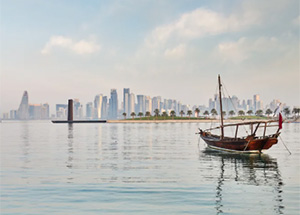
Presenting itself on external platforms, Qatar emphasizes the principles laid down in the country's development program "National Vision 2030". The main ones are modernization and preservation of traditions. Qatar takes great care of history, while relying on the development of modern technologies and improving the level of education, including actively welcoming the role of women in society. Moscow residents could be convinced of Doha's commitment to these principles back in 2018, when Russia handed over the baton of hosting the World Cup to Qatar, and just recently-the guests of the SPIEF. The traditions of Arab hospitality on the site of the Qatar pavilion, attention to the heritage of ancestors within the framework of the cultural program and at the same time ambitious development programs in the speeches of the speakers-ministers and heads of Qatari companies present at the forum. It is so similar to Qatar itself — with skyscrapers and financial centers, and at the same time with the confounding streets of the traditional Arab market and painted felucca waiting for tourists in the harbor.
Breaking down the stereotypes, let's start with the main thing. Qatar is the safest country in the Middle East. And in the world ranking of the British Legatum Institute, which measures the achievements of the countries of the world in terms of their well-being and prosperity, Qatar ranks 19th in the "Security" category. According to the totality of prosperity indicators, Qatar has been competing for the first place among Arab countries with the UAE for a decade, consistently entering the top 50 most prosperous countries in the world. And this is not surprising, given that Qatar is the largest LNG producer and a country with one of the highest levels of GDP per capita — $90.5 thousand per capita at current prices for 2021, according to the IMF. Qatar also has a very high domestic savings rate — 49%.
For those who like stereotypes, it will also be interesting to learn that the face of Qatari politics, the official speaker of the Foreign Ministry, is a woman. Lulwa al-Khatir was appointed to this post in 2017. According to her, women occupy about 35% of positions in the Qatari Foreign Ministry, including the post of the country's permanent representative to the UN. There are also more women among university graduates (about 60%) and among the labor force (52%). As Ms. Al-Khatir stressed, this result was made possible thanks to Qatar's investments in the education system. Another achievement of Doha in this area is the rating of the Qatar University. It occupies the 245th position in the QS Global World Rankings 2021 international university ranking. Among Arab universities, only four are ahead of it: two Saudi, Emirati and Lebanese universities. It is no coincidence that the Emir of Qatar Tamim bin Hamad Al Thani put education in the first place among the promising areas for investment during his online speech at the SPIEF at the plenary session with Russian President Vladimir Putin. "The State of Qatar is experiencing an important stage of comprehensive recovery thanks to the implementation of national strategies, programs and numerous projects within the framework of the "National Vision of Qatar 2030". I want to confirm that the main engine of the Qatari economy at this stage is investment in infrastructure and development projects, including, first of all, education, healthcare, transport, scientific research, small and medium— sized enterprises," he said.
The last few years have been very difficult for Qatar. The coronavirus pandemic has caused a blow to the economy, as well as around the world. The growth rate, according to the IMF, decreased by 2.6% in 2020. But this year, the economy is projected to show growth of 2.4%, and forecasts for the next year are 3.6%. As the emir noted in one of his speeches, thanks to the measures taken by the state, "we were able to maintain the stability of the currency, banking and financial situation in the country, and our official resources continued to grow during 2020 against the background of further diversification of sources and deposits of the financial sector": "The Qatari rial has proven its strength and potential to withstand external crises.
The last few years have been very difficult for Qatar. The coronavirus pandemic has caused a blow to the economy, as well as around the world. The growth rate, according to the IMF, decreased by 2.6% in 2020. But this year, the economy is projected to show growth of 2.4%, and forecasts for the next year are 3.6%. As the emir noted in one of his speeches, thanks to the measures taken by the state, "we were able to maintain the stability of the currency, banking and financial situation in the country, and our official resources continued to grow during 2020 against the background of further diversification of sources and deposits of the financial sector": "The Qatari rial has proven its strength and potential to resist external crises. Despite the pandemic, the national currency has retained its value and freedom of circulation." The experience of the previous three years, when Doha was blockaded by four Arab countries — Saudi Arabia, the United Arab Emirates, Egypt and Bahrain, added to the resistance of the Qatari economy in the year of the coronavirus. At this time, the course was taken for active import substitution and investment in technologies and domestic production. The words "Made in Qatar" have actually become the country's motto. A course has also been taken for "catharization" — the replacement of foreign labor with their own labor resources. And although Doha was doing well, Qatar's reconciliation with opponents had a positive impact on the economy not only of the country, but also of the region. The restoration of diplomatic relations was followed by the lifting of the economic blockade from Qatar and the intensification of regional cooperation — from trade turnover to tourism and investment. The establishment of contacts took place very timely: everyone understands that the upcoming World Cup can bring bonuses not only to Qatar, but also to its neighbors in the region.
The reason for the break in relations between the four countries with Doha in 2017 was Qatar's accusations of destabilizing the situation in the region, supporting terrorist and extremist activities, financing groups associated with Iran, as well as harboring the leaders of the Islamist association "Muslim Brotherhood", spreading the ideology of "Al-Qaeda" and "Islamic state" (all three organizations are banned in the Russian Federation). Then an ultimatum was presented to Qatar: to fulfill 13 requirements within a ten-day period. Among them are the termination of funding for organizations included in the terrorist lists of the Arab Quartet and the United States; the refusal to interfere in the internal affairs of Arab countries and support the opposition there; the suspension of broadcasting of the Al-Jazeera TV channel, which was accused of inciting unrest in the region, and the closure of all media directly or indirectly funded by Doha (including the online publications Al Arabi Al Jadeed and The Middle East Eye). Turkish President Recep Tayyip Erdogan, who is ideologically close to Qatar and provides military support to it, called the isolation of Doha "inhumane and contrary to Islamic values" For three and a half years, Qatar has not fulfilled any of the demands of its opponents, which allowed Doha to feel like a winner in a diplomatic duel and continue its rather active foreign policy, based largely on the very Islamic values that President Erdogan mentioned.
One of the main instruments of Doha's influence in the region is charitable projects. Founded in 1992, the Qatar Charity Foundation is one of the largest non-governmental charitable organizations in the Persian Gulf region and implements development projects in more than 70 countries, including Afghanistan, Yemen, Syria, Lebanon and Palestine. The fund's latest projects focus on assessing the damage caused to the Gaza as a result of the 11-day war with Israel, and helping the affected Palestinians. Doha intends to allocate about $ 0.5 billion for this purpose. At the same time, Qatar has repeatedly rejected accusations made against it of supporting extremist organizations, including the Palestinian Hamas, emphasizing that all aid programs are coordinated with the UN. "Our foreign policy has always been based on the principles of peaceful coexistence, cooperation between all countries and peoples, mutual respect, strengthening common interests, strengthening international peace and security, as well as on the aspirations originating from our place in the Gulf region and our Arab-Islamic affiliation for effective participation in solving the problems of the Arab nation and the Islamic Ummah " the Emir of Qatar notes in one of his speeches.
Doha strives to provide own platform for dialogue between the different sides of the conflicts. For example, over the past decade and a half, Qatar has acted as an intermediary between the Houthi Ansar Allah movement and the Yemeni government; between the Sudanese government and the Justice and Equality Movement in Darfur; between Sudan and Chad; between Djibouti and Eritrea; between Sudan and Eritrea; between the Palestinian Fatah and Hamas movements; between Lebanese parties; between the United States and the Taliban. And now Qatar remains one of the main mediators in the inter-Afghan dialogue and offers services in the dialogue between Iran and the United States, as well as between Iran and the Arab monarchies of the Gulf.
Islamic values and Muslim solidarity play an important role not only in Qatar's foreign policy, but also in the economy. A financial model based on the principles of Islamic (partner) contracts is a set of methods and financing mechanisms that allow economic activity to be carried out without violating the basic principles of Shariah (Muslim law). Islamic banking has a number of prohibitions and restrictions: a ban on the payment of interest and interest-bearing transactions derived from it; a ban on transactions with conditions of uncertainty and on financing such sectors of the economy as gambling, pork and alcohol production. Mandatory identification of the real assets underlying the transaction is required. "Islamic management, unlike the Western model, is tied to the internal requirements of a person. Here dubious transactions aimed at profit at any price cannot pass. Moral principles are regulated by the Koran. A person is responsible for mistakes not to his superiors, but to the Almighty, " explained Svetlana Babenkova, senior researcher at the Center for Arab and Islamic Studies at the Institute of Oriental Studies of the Russian Academy of Sciences.
At the same time, Islamic financial institutions today work not only in countries where Islam is the state religion. Islamic banks, Islamic insurance (takaful), specialized funds, Islamic bonds (sukuk) have become an integral part of the financial market of some Western countries, including the United Kingdom, the United States, Germany, Luxembourg and Switzerland. By 2024, the global assets of Islamic finance can reach $3.69 trillion, according to the report on the development of Islamic finance for 2020, compiled by Refinitiv and the Islamic Private Sector Development Corporation. In 2019, the sector grew by 14%, which corresponds to global assets of $1.99 trillion, while in 2018 only 1% growth was recorded.
According to the Union of Arab Banks, Qatar accounts for about 6% of the world's assets that comply with Shariah law. At the same time, the chairman and managing director of Qatar Dukhan Bank, Sheikh Mohammed bin Hamad Al Thani, claims that Qatar has become the fifth largest Islamic finance market in the world with assets worth $144 billion, and Islamic banking assets account for 26% of the total banking assets in the country. In any case, the growing interest in the Islamic Financial services (IFS) sector is obvious, and companies working in this field are offered special support and attractive conditions for activities in Qatar. In 2018, the world's largest Islamic exchange-traded fund for a single country was registered on the Qatar Stock Exchange. According to the report of the Qatar Financial Center (QFC) for 2019, the total assets of IFS grew by an average of 8% per year in the period from 2015 to June 2019 and amounted to 33% of the total assets of the Qatar financial sector. The Qatar Financial Center provides special support to the IFS, offering attractive operating conditions for international Islamic financial firms. In March 2019, QFC announced the planned launch of a new Islamic bank in Qatar, specializing in financing global hydrocarbon projects. In addition, according to the regional consulting company Alpen Capital, Qatar's insurance industry was the fastest growing in the Persian Gulf countries between 2013 and 2018, and takaful played a crucial role in this process. The sukuk sector is also developing in Qatar, attracting foreign investors, among other things. The latest issues of sukuk were placed on the London and Irish Stock Exchanges.
With the overcoming of the diplomatic crisis in the Gulf, the chances of IFS growth in Qatar have increased dramatically. "Qatar is unique in that banking sector is divided into Islamic and traditional. This immediately gives an advantage, " experts from the Qatar division of Carnegie Mellon University believe. At the same time, they note that the assets of Islamic banks will grow faster than usual, especially against the background of the recovery from the consequences of the coronavirus pandemic. "This is not surprising, given the inherent business model of Islamic banks with a low level of risk for certain financial indicators. The business model of Islamic finance gives firms a certain stability, and we expect that most Islamic banks will successfully overcome the crisis, "experts told the Gulf Times.
The development of cooperation in the sphere of IFS is also promising for Russia, especially since Qatar actively supports the Russian Ummah at the political level. Cooperation through religious structures is an important part of both Russian and Qatari diplomacy. And in the future, perhaps, economic cooperation. In April, the State Duma Committee on the Financial Market of the Russian Federation decided to create a working group on Islamic finance, whose task is to consider the possibility of a targeted change in Russian legislation to attract financing from Islamic countries. Some Russian banks and financial structures have been trying on the IFS for a long time. Thus, in February, Sberbank announced that its partner financing center, jointly with experts from Sberbank Middle East, conducted a screening for compliance with the norms of Islamic financing of shares of Russian companies traded on the Moscow and St. Petersburg Stock Exchanges. As a result, 18 shares of Russian companies that can be defined as halal were identified. "Islamic finance in Russia is a promising area. Fortunately, the rules of the IFS operation are clear for lawyers of European systems. The documents prepared by experts in the field of Islamic economics are distinguished by a high level of legal technology, "Maxim Bashkatov, head of the Legal Development department at the Center for Strategic Research , explained. According to him, Doha is becoming a major hub of the Islamic digital economy and establishing contacts between Russian and Qatari businesses in the field of IFS is one of the foundations for the future.
In 2022, Qatar will become the first Arab and Islamic host country of the world football championship. And this is a double responsibility — not only for yourself, but also for a quarter of the world's population, about 2 billion people who profess Islam. Many negative stereotypes and associations have been associated with this religion in recent years, and the Middle East seems to be a place where wars do not stop. Until recently, Qatar was not as generally known to the world as the custodian of Islamic shrines, the Kingdom of Saudi Arabia, or the United Arab Emirates, which has already become a familiar business and tourist center of the region. Perhaps, the voice of Doha-the Al-Jazeera TV channel, which literally break the Middle East-received world recognition earlier than Qatar itself. Now, in addition to Al-Jazeera, the country's well-known brands include Qatar Airways, Qatar University, the Qatar Charity Foundation and Qatar Investment Authority, one of the largest sovereign funds in the world. But for the general public, Qatar is still a mystery in many ways. The World Cup is a great opportunity to show yourself, as well as the other side of Islam and the Arab world.
Presenting itself on external platforms, Qatar emphasizes the principles laid down in the country's development program "National Vision 2030". The main ones are modernization and preservation of traditions. Qatar takes great care of history, while relying on the development of modern technologies and improving the level of education, including actively welcoming the role of women in society. Moscow residents could be convinced of Doha's commitment to these principles back in 2018, when Russia handed over the baton of hosting the World Cup to Qatar, and just recently-the guests of the SPIEF. The traditions of Arab hospitality on the site of the Qatar pavilion, attention to the heritage of ancestors within the framework of the cultural program and at the same time ambitious development programs in the speeches of the speakers-ministers and heads of Qatari companies present at the forum. It is so similar to Qatar itself — with skyscrapers and financial centers, and at the same time with the confounding streets of the traditional Arab market and painted felucca waiting for tourists in the harbor.
Breaking down the stereotypes, let's start with the main thing. Qatar is the safest country in the Middle East. And in the world ranking of the British Legatum Institute, which measures the achievements of the countries of the world in terms of their well-being and prosperity, Qatar ranks 19th in the "Security" category. According to the totality of prosperity indicators, Qatar has been competing for the first place among Arab countries with the UAE for a decade, consistently entering the top 50 most prosperous countries in the world. And this is not surprising, given that Qatar is the largest LNG producer and a country with one of the highest levels of GDP per capita — $90.5 thousand per capita at current prices for 2021, according to the IMF. Qatar also has a very high domestic savings rate — 49%.
For those who like stereotypes, it will also be interesting to learn that the face of Qatari politics, the official speaker of the Foreign Ministry, is a woman. Lulwa al-Khatir was appointed to this post in 2017. According to her, women occupy about 35% of positions in the Qatari Foreign Ministry, including the post of the country's permanent representative to the UN. There are also more women among university graduates (about 60%) and among the labor force (52%). As Ms. Al-Khatir stressed, this result was made possible thanks to Qatar's investments in the education system. Another achievement of Doha in this area is the rating of the Qatar University. It occupies the 245th position in the QS Global World Rankings 2021 international university ranking. Among Arab universities, only four are ahead of it: two Saudi, Emirati and Lebanese universities. It is no coincidence that the Emir of Qatar Tamim bin Hamad Al Thani put education in the first place among the promising areas for investment during his online speech at the SPIEF at the plenary session with Russian President Vladimir Putin. "The State of Qatar is experiencing an important stage of comprehensive recovery thanks to the implementation of national strategies, programs and numerous projects within the framework of the "National Vision of Qatar 2030". I want to confirm that the main engine of the Qatari economy at this stage is investment in infrastructure and development projects, including, first of all, education, healthcare, transport, scientific research, small and medium— sized enterprises," he said.
The last few years have been very difficult for Qatar. The coronavirus pandemic has caused a blow to the economy, as well as around the world. The growth rate, according to the IMF, decreased by 2.6% in 2020. But this year, the economy is projected to show growth of 2.4%, and forecasts for the next year are 3.6%. As the emir noted in one of his speeches, thanks to the measures taken by the state, "we were able to maintain the stability of the currency, banking and financial situation in the country, and our official resources continued to grow during 2020 against the background of further diversification of sources and deposits of the financial sector": "The Qatari rial has proven its strength and potential to withstand external crises.
The last few years have been very difficult for Qatar. The coronavirus pandemic has caused a blow to the economy, as well as around the world. The growth rate, according to the IMF, decreased by 2.6% in 2020. But this year, the economy is projected to show growth of 2.4%, and forecasts for the next year are 3.6%. As the emir noted in one of his speeches, thanks to the measures taken by the state, "we were able to maintain the stability of the currency, banking and financial situation in the country, and our official resources continued to grow during 2020 against the background of further diversification of sources and deposits of the financial sector": "The Qatari rial has proven its strength and potential to resist external crises. Despite the pandemic, the national currency has retained its value and freedom of circulation." The experience of the previous three years, when Doha was blockaded by four Arab countries — Saudi Arabia, the United Arab Emirates, Egypt and Bahrain, added to the resistance of the Qatari economy in the year of the coronavirus. At this time, the course was taken for active import substitution and investment in technologies and domestic production. The words "Made in Qatar" have actually become the country's motto. A course has also been taken for "catharization" — the replacement of foreign labor with their own labor resources. And although Doha was doing well, Qatar's reconciliation with opponents had a positive impact on the economy not only of the country, but also of the region. The restoration of diplomatic relations was followed by the lifting of the economic blockade from Qatar and the intensification of regional cooperation — from trade turnover to tourism and investment. The establishment of contacts took place very timely: everyone understands that the upcoming World Cup can bring bonuses not only to Qatar, but also to its neighbors in the region.
The reason for the break in relations between the four countries with Doha in 2017 was Qatar's accusations of destabilizing the situation in the region, supporting terrorist and extremist activities, financing groups associated with Iran, as well as harboring the leaders of the Islamist association "Muslim Brotherhood", spreading the ideology of "Al-Qaeda" and "Islamic state" (all three organizations are banned in the Russian Federation). Then an ultimatum was presented to Qatar: to fulfill 13 requirements within a ten-day period. Among them are the termination of funding for organizations included in the terrorist lists of the Arab Quartet and the United States; the refusal to interfere in the internal affairs of Arab countries and support the opposition there; the suspension of broadcasting of the Al-Jazeera TV channel, which was accused of inciting unrest in the region, and the closure of all media directly or indirectly funded by Doha (including the online publications Al Arabi Al Jadeed and The Middle East Eye). Turkish President Recep Tayyip Erdogan, who is ideologically close to Qatar and provides military support to it, called the isolation of Doha "inhumane and contrary to Islamic values" For three and a half years, Qatar has not fulfilled any of the demands of its opponents, which allowed Doha to feel like a winner in a diplomatic duel and continue its rather active foreign policy, based largely on the very Islamic values that President Erdogan mentioned.
One of the main instruments of Doha's influence in the region is charitable projects. Founded in 1992, the Qatar Charity Foundation is one of the largest non-governmental charitable organizations in the Persian Gulf region and implements development projects in more than 70 countries, including Afghanistan, Yemen, Syria, Lebanon and Palestine. The fund's latest projects focus on assessing the damage caused to the Gaza as a result of the 11-day war with Israel, and helping the affected Palestinians. Doha intends to allocate about $ 0.5 billion for this purpose. At the same time, Qatar has repeatedly rejected accusations made against it of supporting extremist organizations, including the Palestinian Hamas, emphasizing that all aid programs are coordinated with the UN. "Our foreign policy has always been based on the principles of peaceful coexistence, cooperation between all countries and peoples, mutual respect, strengthening common interests, strengthening international peace and security, as well as on the aspirations originating from our place in the Gulf region and our Arab-Islamic affiliation for effective participation in solving the problems of the Arab nation and the Islamic Ummah " the Emir of Qatar notes in one of his speeches.
Doha strives to provide own platform for dialogue between the different sides of the conflicts. For example, over the past decade and a half, Qatar has acted as an intermediary between the Houthi Ansar Allah movement and the Yemeni government; between the Sudanese government and the Justice and Equality Movement in Darfur; between Sudan and Chad; between Djibouti and Eritrea; between Sudan and Eritrea; between the Palestinian Fatah and Hamas movements; between Lebanese parties; between the United States and the Taliban. And now Qatar remains one of the main mediators in the inter-Afghan dialogue and offers services in the dialogue between Iran and the United States, as well as between Iran and the Arab monarchies of the Gulf.
Islamic values and Muslim solidarity play an important role not only in Qatar's foreign policy, but also in the economy. A financial model based on the principles of Islamic (partner) contracts is a set of methods and financing mechanisms that allow economic activity to be carried out without violating the basic principles of Shariah (Muslim law). Islamic banking has a number of prohibitions and restrictions: a ban on the payment of interest and interest-bearing transactions derived from it; a ban on transactions with conditions of uncertainty and on financing such sectors of the economy as gambling, pork and alcohol production. Mandatory identification of the real assets underlying the transaction is required. "Islamic management, unlike the Western model, is tied to the internal requirements of a person. Here dubious transactions aimed at profit at any price cannot pass. Moral principles are regulated by the Koran. A person is responsible for mistakes not to his superiors, but to the Almighty, " explained Svetlana Babenkova, senior researcher at the Center for Arab and Islamic Studies at the Institute of Oriental Studies of the Russian Academy of Sciences.
At the same time, Islamic financial institutions today work not only in countries where Islam is the state religion. Islamic banks, Islamic insurance (takaful), specialized funds, Islamic bonds (sukuk) have become an integral part of the financial market of some Western countries, including the United Kingdom, the United States, Germany, Luxembourg and Switzerland. By 2024, the global assets of Islamic finance can reach $3.69 trillion, according to the report on the development of Islamic finance for 2020, compiled by Refinitiv and the Islamic Private Sector Development Corporation. In 2019, the sector grew by 14%, which corresponds to global assets of $1.99 trillion, while in 2018 only 1% growth was recorded.
According to the Union of Arab Banks, Qatar accounts for about 6% of the world's assets that comply with Shariah law. At the same time, the chairman and managing director of Qatar Dukhan Bank, Sheikh Mohammed bin Hamad Al Thani, claims that Qatar has become the fifth largest Islamic finance market in the world with assets worth $144 billion, and Islamic banking assets account for 26% of the total banking assets in the country. In any case, the growing interest in the Islamic Financial services (IFS) sector is obvious, and companies working in this field are offered special support and attractive conditions for activities in Qatar. In 2018, the world's largest Islamic exchange-traded fund for a single country was registered on the Qatar Stock Exchange. According to the report of the Qatar Financial Center (QFC) for 2019, the total assets of IFS grew by an average of 8% per year in the period from 2015 to June 2019 and amounted to 33% of the total assets of the Qatar financial sector. The Qatar Financial Center provides special support to the IFS, offering attractive operating conditions for international Islamic financial firms. In March 2019, QFC announced the planned launch of a new Islamic bank in Qatar, specializing in financing global hydrocarbon projects. In addition, according to the regional consulting company Alpen Capital, Qatar's insurance industry was the fastest growing in the Persian Gulf countries between 2013 and 2018, and takaful played a crucial role in this process. The sukuk sector is also developing in Qatar, attracting foreign investors, among other things. The latest issues of sukuk were placed on the London and Irish Stock Exchanges.
With the overcoming of the diplomatic crisis in the Gulf, the chances of IFS growth in Qatar have increased dramatically. "Qatar is unique in that banking sector is divided into Islamic and traditional. This immediately gives an advantage, " experts from the Qatar division of Carnegie Mellon University believe. At the same time, they note that the assets of Islamic banks will grow faster than usual, especially against the background of the recovery from the consequences of the coronavirus pandemic. "This is not surprising, given the inherent business model of Islamic banks with a low level of risk for certain financial indicators. The business model of Islamic finance gives firms a certain stability, and we expect that most Islamic banks will successfully overcome the crisis, "experts told the Gulf Times.
The development of cooperation in the sphere of IFS is also promising for Russia, especially since Qatar actively supports the Russian Ummah at the political level. Cooperation through religious structures is an important part of both Russian and Qatari diplomacy. And in the future, perhaps, economic cooperation. In April, the State Duma Committee on the Financial Market of the Russian Federation decided to create a working group on Islamic finance, whose task is to consider the possibility of a targeted change in Russian legislation to attract financing from Islamic countries. Some Russian banks and financial structures have been trying on the IFS for a long time. Thus, in February, Sberbank announced that its partner financing center, jointly with experts from Sberbank Middle East, conducted a screening for compliance with the norms of Islamic financing of shares of Russian companies traded on the Moscow and St. Petersburg Stock Exchanges. As a result, 18 shares of Russian companies that can be defined as halal were identified. "Islamic finance in Russia is a promising area. Fortunately, the rules of the IFS operation are clear for lawyers of European systems. The documents prepared by experts in the field of Islamic economics are distinguished by a high level of legal technology, "Maxim Bashkatov, head of the Legal Development department at the Center for Strategic Research , explained. According to him, Doha is becoming a major hub of the Islamic digital economy and establishing contacts between Russian and Qatari businesses in the field of IFS is one of the foundations for the future.