
The UNESCO list has been supplemented with objects from the Islamic world
The 44th session of the UNESCO World Heritage Committee was recently held. It was held in an online format. At this session, the list of the cultural heritage of all mankind was updated and some objects of the Islamic world were included in it. Below is a small reference about the included objects:
Trans-Iranian Railway
The Trans-Iranian Railway connects the Caspian Sea in the northeast with the Persian Gulf in the southwest crossing two mountain ranges as well as rivers, highlands, forests and plains, and four different climatic areas. Started in 1927 and completed in 1938, the 1,394-kilometre-long railway was designed and executed in a successful collaboration between the Iranian government and 43 construction contractors from many countries. The railway is notable for its scale and the engineering works it required to overcome steep routes and other difficulties. Its construction involved extensive mountain cutting in some areas, while the rugged terrain in others dictated the construction of 174 large bridges, 186 small bridges and 224 tunnels, including 11 spiral tunnels. Unlike most early railway projects, construction of the Trans-Iranian Railway was funded by national taxes to avoid foreign investment and control.
Ḥimā Cultural Area
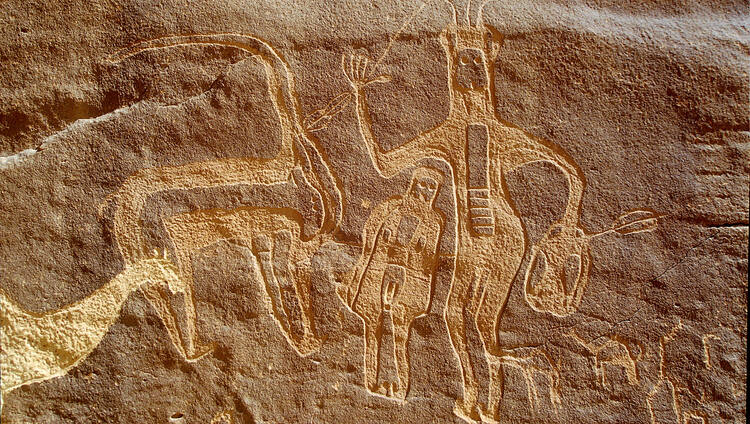
Located in an arid, mountainous area of southwest Saudi Arabia, on one of the Arabian Peninsula’s ancient caravan routes, Ḥimā Cultural Area contains a substantial collection of rock art images depicting hunting, fauna, flora and lifestyles in a cultural continuity of 7,000 years. Travellers and armies camping on the site left a wealth of rock inscriptions and petroglyphs through the ages and until the late 20th century, most of which are preserved in pristine condition. Inscriptions are in different scripts, including Musnad, Aramaic-Nabatean, South-Arabian, Thamudic, Greek and Arabic. The property and its buffer zone are also rich in unexcavated archaeological resources in the form of cairns, stone structures, interments, stone tool scatters and ancient wells. This location is at the oldest known toll station on an important ancient desert caravan route, where the wells of Bi’r Ḥimā date back at least 3,000 years and still produce fresh water.
Arslantepe Mound
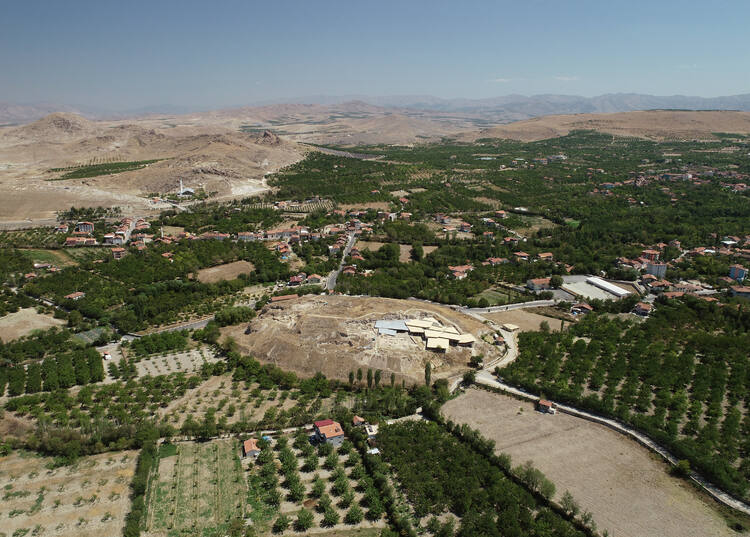
Arslantepe Mound is a 30-metre-tall archaeological tell located in the Malatya plain, 12 km south-west of the Euphrates River. Archaeological evidence from the site testifies to its occupation from at least the 6th millennium BCE up until the late Roman period. The earliest layers of the Early Uruk period are characterized by adobe houses from the first half of the 4th millennium BCE. The most prominent and flourishing period of the site was in the Late Chalcolithic period, during which the so-called palace complex was constructed. Considerable evidence also testifies to the Early Bronze Age period, most prominently identified by the Royal Tomb complex. The archaeological stratigraphy then extends to the Paleo-Assyrian and Hittite periods, including Neo-Hittite levels. The site illustrates the processes which led to the emergence of a State society in the Near East and a sophisticated bureaucratic system that predates writing. Exceptional metal objects and weapons have been excavated at the site, among them the earliest swords so far known in the world, which suggests the beginning of forms of organized combat as the prerogative of an elite, who exhibited them as instruments of their new political power.
Cultural Landscape of Hawraman/Uramanat
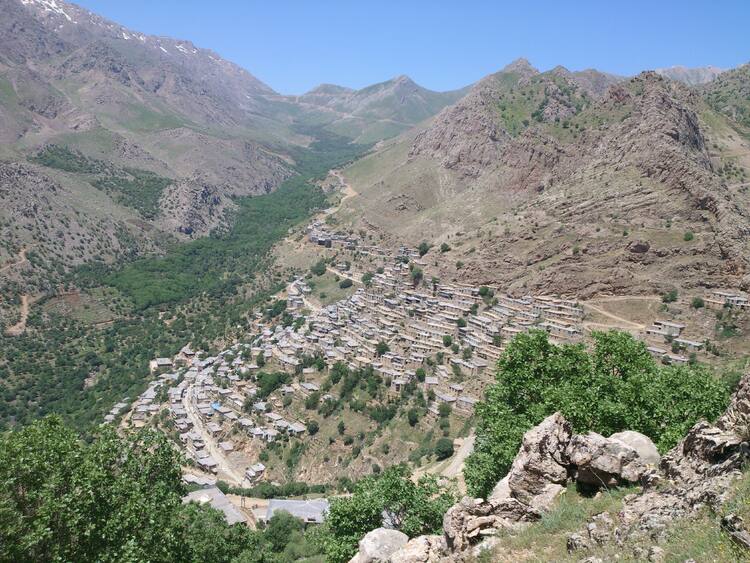
The remote and mountainous landscape of Hawraman/Uramanat bears testimony to the traditional culture of the Hawrami people, an agropastoral Kurdish tribe that has inhabited the region since about 3000 BCE. The property, at the heart of the Zagros Mountains in the provinces of Kurdistan and Kermanshah along the western border of Iran, encompasses two components: the Central-Eastern Valley (Zhaverud and Takht, in Kurdistan Province); and the Western Valley (Lahun, in Kermanshah Province). The mode of human habitation in these two valleys has been adapted over millennia to the rough mountainous environment. Tiered steep-slope planning and architecture, gardening on dry-stone terraces, livestock breeding, and seasonal vertical migration are among the distinctive features of the local culture and life of the semi-nomadic Hawrami people who dwell in lowlands and highlands during different seasons of each year. Their uninterrupted presence in the landscape, which is also characterized by exceptional biodiversity and endemism, is evidenced by stone tools, caves and rock shelters, mounds, remnants of permanent and temporary settlement sites, and workshops, cemeteries, roads, villages, castles, and more. The 12 villages included in the property illustrate the Hawrami people’s evolving responses to the scarcity of productive land in their mountainous environment through the millennia.
As-Salt - The Place of Tolerance and Urban Hospitality
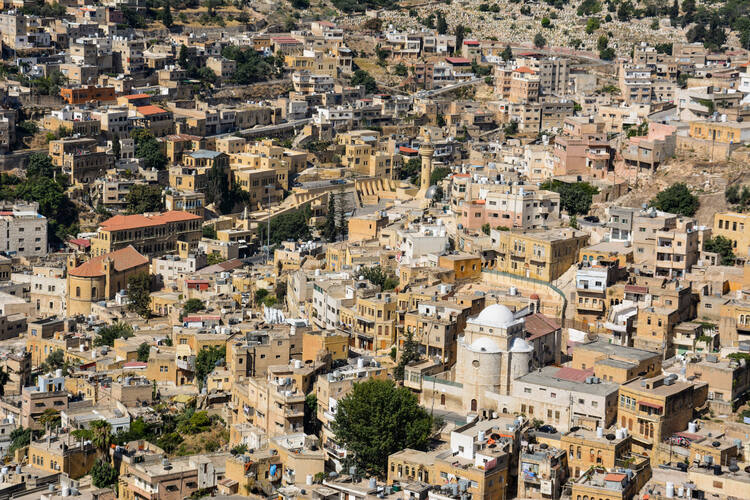
Built on three closely-spaced hills in the Balqa highland of west-central Jordan, the city of As-Salt, was an important trading link between the eastern desert and the west. During the last 60 years of the Ottoman period, the region prospered from the arrival and settlement of merchants from Nablus, Syria, and Lebanon who made their fortunes in trade, banking, and farming. This prosperity attracted skilled craftsmen from different parts of the region who worked on transforming the modest rural settlement into a thriving town with a distinctive layout and an architecture characterized by large public buildings and family residences constructed of local yellow limestone. The site’s urban core includes approximately 650 significant historic buildings exhibiting a blend of European Art Nouveau and Neo-Colonial styles combined with local traditions. The city’s non-segregated development expresses tolerance between Muslims and Christians who developed traditions of hospitality evidenced in Madafas (guest houses, known as Dawaween) and the social welfare system known as Takaful Ijtimai’. These tangible and intangible aspects emerged through a melding of rural traditions and bourgeois merchants’ and tradespeople’s practices during the Golden Age of As-Salt’s development between 1860s to 1920s.
Sudanese style mosques in northern Côte d’Ivoire
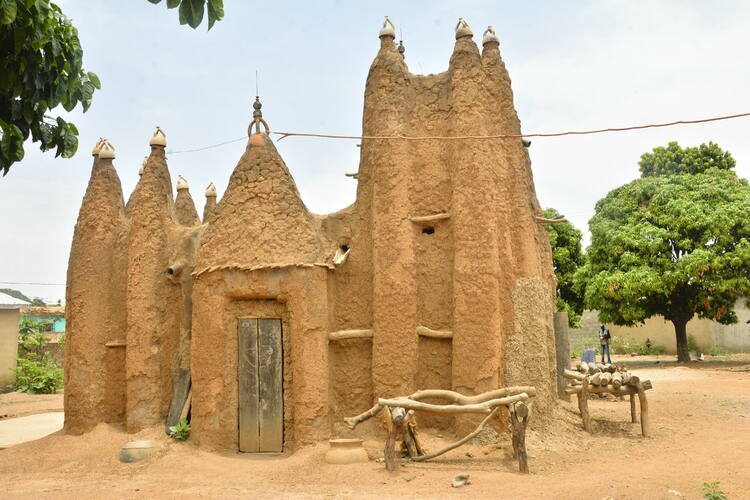
The eight small adobe mosques, at Tengréla, Kouto, Sorobango, Samatiguila, M’Bengué, Kong and Kaouara are characterized by protruding timbers, vertical buttresses crowned by pottery or ostrich eggs, and tapering minarets. They present an interpretation of an architectural style thought to have originated around the 14th century in the town of Djenné, then part of the Empire of Mali, which prospered from the trade in gold and salt across the Sahara to North Africa. Particularly from the 16th century, the style spread south from the desert regions into the Sudanese savannah, becoming lower and developing stouter buttresses in response to the wetter climate. The mosques are the best conserved of 20 such edifices that remain in Côte d’Ivoire, where hundreds existed early last century. The mosques’ distinctive Sudanese style, specific to the savannah region of West Africa, developed between the 17th and 19th centuries as traders and scholars spread south from the Empire of Mali, extending the trans-Saharan mercantile routes into the forest area. They present highly important testimonies to the trans-Saharan trade that facilitated the expansion of Islam and Islamic culture and reflect a fusion of Islamic and local architectural forms in a highly distinctive style that has persisted over time.
Source of information:
whc.unesco.org
Trans-Iranian Railway
The Trans-Iranian Railway connects the Caspian Sea in the northeast with the Persian Gulf in the southwest crossing two mountain ranges as well as rivers, highlands, forests and plains, and four different climatic areas. Started in 1927 and completed in 1938, the 1,394-kilometre-long railway was designed and executed in a successful collaboration between the Iranian government and 43 construction contractors from many countries. The railway is notable for its scale and the engineering works it required to overcome steep routes and other difficulties. Its construction involved extensive mountain cutting in some areas, while the rugged terrain in others dictated the construction of 174 large bridges, 186 small bridges and 224 tunnels, including 11 spiral tunnels. Unlike most early railway projects, construction of the Trans-Iranian Railway was funded by national taxes to avoid foreign investment and control.
Ḥimā Cultural Area
Located in an arid, mountainous area of southwest Saudi Arabia, on one of the Arabian Peninsula’s ancient caravan routes, Ḥimā Cultural Area contains a substantial collection of rock art images depicting hunting, fauna, flora and lifestyles in a cultural continuity of 7,000 years. Travellers and armies camping on the site left a wealth of rock inscriptions and petroglyphs through the ages and until the late 20th century, most of which are preserved in pristine condition. Inscriptions are in different scripts, including Musnad, Aramaic-Nabatean, South-Arabian, Thamudic, Greek and Arabic. The property and its buffer zone are also rich in unexcavated archaeological resources in the form of cairns, stone structures, interments, stone tool scatters and ancient wells. This location is at the oldest known toll station on an important ancient desert caravan route, where the wells of Bi’r Ḥimā date back at least 3,000 years and still produce fresh water.
Arslantepe Mound
Arslantepe Mound is a 30-metre-tall archaeological tell located in the Malatya plain, 12 km south-west of the Euphrates River. Archaeological evidence from the site testifies to its occupation from at least the 6th millennium BCE up until the late Roman period. The earliest layers of the Early Uruk period are characterized by adobe houses from the first half of the 4th millennium BCE. The most prominent and flourishing period of the site was in the Late Chalcolithic period, during which the so-called palace complex was constructed. Considerable evidence also testifies to the Early Bronze Age period, most prominently identified by the Royal Tomb complex. The archaeological stratigraphy then extends to the Paleo-Assyrian and Hittite periods, including Neo-Hittite levels. The site illustrates the processes which led to the emergence of a State society in the Near East and a sophisticated bureaucratic system that predates writing. Exceptional metal objects and weapons have been excavated at the site, among them the earliest swords so far known in the world, which suggests the beginning of forms of organized combat as the prerogative of an elite, who exhibited them as instruments of their new political power.
Cultural Landscape of Hawraman/Uramanat
The remote and mountainous landscape of Hawraman/Uramanat bears testimony to the traditional culture of the Hawrami people, an agropastoral Kurdish tribe that has inhabited the region since about 3000 BCE. The property, at the heart of the Zagros Mountains in the provinces of Kurdistan and Kermanshah along the western border of Iran, encompasses two components: the Central-Eastern Valley (Zhaverud and Takht, in Kurdistan Province); and the Western Valley (Lahun, in Kermanshah Province). The mode of human habitation in these two valleys has been adapted over millennia to the rough mountainous environment. Tiered steep-slope planning and architecture, gardening on dry-stone terraces, livestock breeding, and seasonal vertical migration are among the distinctive features of the local culture and life of the semi-nomadic Hawrami people who dwell in lowlands and highlands during different seasons of each year. Their uninterrupted presence in the landscape, which is also characterized by exceptional biodiversity and endemism, is evidenced by stone tools, caves and rock shelters, mounds, remnants of permanent and temporary settlement sites, and workshops, cemeteries, roads, villages, castles, and more. The 12 villages included in the property illustrate the Hawrami people’s evolving responses to the scarcity of productive land in their mountainous environment through the millennia.
As-Salt - The Place of Tolerance and Urban Hospitality
Built on three closely-spaced hills in the Balqa highland of west-central Jordan, the city of As-Salt, was an important trading link between the eastern desert and the west. During the last 60 years of the Ottoman period, the region prospered from the arrival and settlement of merchants from Nablus, Syria, and Lebanon who made their fortunes in trade, banking, and farming. This prosperity attracted skilled craftsmen from different parts of the region who worked on transforming the modest rural settlement into a thriving town with a distinctive layout and an architecture characterized by large public buildings and family residences constructed of local yellow limestone. The site’s urban core includes approximately 650 significant historic buildings exhibiting a blend of European Art Nouveau and Neo-Colonial styles combined with local traditions. The city’s non-segregated development expresses tolerance between Muslims and Christians who developed traditions of hospitality evidenced in Madafas (guest houses, known as Dawaween) and the social welfare system known as Takaful Ijtimai’. These tangible and intangible aspects emerged through a melding of rural traditions and bourgeois merchants’ and tradespeople’s practices during the Golden Age of As-Salt’s development between 1860s to 1920s.
Sudanese style mosques in northern Côte d’Ivoire
The eight small adobe mosques, at Tengréla, Kouto, Sorobango, Samatiguila, M’Bengué, Kong and Kaouara are characterized by protruding timbers, vertical buttresses crowned by pottery or ostrich eggs, and tapering minarets. They present an interpretation of an architectural style thought to have originated around the 14th century in the town of Djenné, then part of the Empire of Mali, which prospered from the trade in gold and salt across the Sahara to North Africa. Particularly from the 16th century, the style spread south from the desert regions into the Sudanese savannah, becoming lower and developing stouter buttresses in response to the wetter climate. The mosques are the best conserved of 20 such edifices that remain in Côte d’Ivoire, where hundreds existed early last century. The mosques’ distinctive Sudanese style, specific to the savannah region of West Africa, developed between the 17th and 19th centuries as traders and scholars spread south from the Empire of Mali, extending the trans-Saharan mercantile routes into the forest area. They present highly important testimonies to the trans-Saharan trade that facilitated the expansion of Islam and Islamic culture and reflect a fusion of Islamic and local architectural forms in a highly distinctive style that has persisted over time.
Source of information:
whc.unesco.org